Brahma Svarupamudaye
अस्तमाने स्वयं विष्णुं त्रयीमूर्तिं दिवाकरम् ॥
astamāne svayaṃ viṣṇuṃ trayīmūrtiṃ divākaram ..
Description
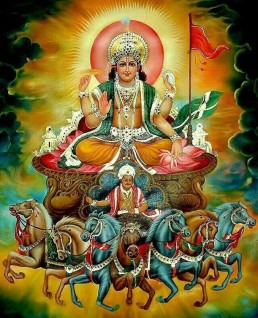
Lord Surya, also known as the Sun God, is a central figure in Hinduism, representing the source of light, life, and energy. He is revered as the sustainer of life and is often associated with health, vitality, and the dispelling of darkness and ignorance.
The verse describes how the Sun God (Surya) manifests as the three primary deities of the Hindu Trinity—the Trimurti—at different times of the day.
Sunrise (Brahma): At dawn, the Sun represents Brahma, the Creator. Just as Brahma brings the universe into being, the sunrise brings a new day and fresh life into the world.
Mid-noon (Maheshwara): At midday, the Sun’s intensity is at its peak, representing Shiva (Maheshwara), the Transformer/Destroyer. This stage symbolizes the peak energy and the “destructive” heat required for various natural cycles.
Sunset (Vishnu): At dusk, the Sun takes the form of Vishnu, the Preserver. As the day ends, the world enters a period of rest and preservation.
Divākaram (The Sun): The Sun is referred to as “Divākara,” the “maker of the day,” who unites these three divine powers into one visible celestial body.
Other Surya Shlokams
Aditya Hrudayam
This hymn is dedicated to Āditya or Sūrya (the Sun God) found in the Yuddha Kānda of Vālmīki's Rāmāyana. It was recited by the sage Agastya to Rāma in the battlefield before fighting with the asura ki
Gayatri Mantra
Om, the Lord, is earth, the space in between and the heavens. That Lord is the one who is the most worshipful. We meditate on that effulgent, all-knowledge Lord. May he set our intellects in the right
Namah Savitre Jagadeka
Salutation Surya, the only eye of the world, the cause of the birth, sustenance and destruction of the world; The repository of the three forms, the protector of the three gunas in the self, O Brahma,
Surya Ashtakam
The Suryashtakam is a hymn dedicated to Lord Surya, the Sun. It is from Samba Puranam, an ancient text of India, and it is recited to invoke blessings of good health, abundance, and a happy, long life
Brahma Svarupamudaye – Surya – In Sanskrit with English Transliteration, Translation and Meaning. Commentary for selected Shlokams.