
Durga Chalisa
नमो नमो दुर्गे दुःख हरनी॥१॥
namo namo durge duḥkha haranī..1..
तिहूँ लोक फैली उजियारी॥२॥
tihūm̐ loka phailī ujiyārī..2..
नेत्र लाल भृकुटि विकराला॥३॥
netra lāla bhṛkuṭi vikarālā..3..
दरश करत जन अति सुख पावे॥४॥
daraśa karata jana ati sukha pāve..4..
पालन हेतु अन्न धन दीना॥५॥
pālana hetu anna dhana dīnā..5..
तुम ही आदि सुन्दरी बाला॥६॥
tuma hī ādi sundarī bālā..6..
तुम गौरी शिवशंकर प्यारी॥७॥
tuma gaurī śivaśaṃkara pyārī..7..
ब्रह्मा विष्णु तुम्हें नित ध्यावें॥८॥
brahmā viṣṇu tumheṃ nita dhyāveṃ..8..
दे सुबुद्धि ऋषि मुनिन उबारा॥९॥
de subuddhi ṛṣi munina ubārā..9..
परगट भई फाड़कर खम्बा॥१०॥
paragaṭa bhaī phār̤akara khambā..10..
हिरण्याक्ष को स्वर्ग पठायो॥११॥
hiraṇyākṣa ko svarga paṭhāyo..11..
श्री नारायण अंग समाहीं॥१२॥
śrī nārāyaṇa aṃga samāhīṃ..12..
दयासिन्धु दीजै मन आसा॥१३॥
dayāsindhu dījai mana āsā..13..
महिमा अमित न जात बखानी॥१४॥
mahimā amita na jāta bakhānī..14..
भुवनेश्वरी बगला सुख दाता॥१५॥
bhuvaneśvarī bagalā sukha dātā..15..
छिन्न भाल भव दुःख निवारिणी॥१६॥
chinna bhāla bhava duḥkha nivāriṇī..16..
लांगुर वीर चलत अगवानी॥१७॥
lāṃgura vīra calata agavānī..17..
जाको देख काल डर भाजै॥१८॥
jāko dekha kāla ḍara bhājai..18..
जाते उठत शत्रु हिय शूला॥१९॥
jāte uṭhata śatru hiya śūlā..19..
तिहुँलोक में डंका बाजत॥२०॥
tihum̐loka meṃ ḍaṃkā bājata..20..
रक्तबीज शंखन संहारे॥२१॥
raktabīja śaṃkhana saṃhāre..21..
जेहि अघ भार मही अकुलानी॥२२॥
jehi agha bhāra mahī akulānī..22..
सेन सहित तुम तिहि संहारा॥२३॥
sena sahita tuma tihi saṃhārā..23..
भई सहाय मातु तुम तब तब॥२४॥
bhaī sahāya mātu tuma taba taba..24..
तब महिमा सब रहें अशोका॥२५॥
taba mahimā saba raheṃ aśokā..25..
तुम्हें सदा पूजें नर-नारी॥२६॥
tumheṃ sadā pūjeṃ nara-nārī..26..
दुःख दारिद्र निकट नहिं आवें॥२७॥
duḥkha dāridra nikaṭa nahiṃ āveṃ..27..
जन्म-मरण ताकौ छुटि जाई॥२८॥
janma-maraṇa tākau chuṭi jāī..28..
योग न हो बिन शक्ति तुम्हारी॥२९॥
yoga na ho bina śakti tumhārī..29..
काम अरु क्रोध जीति सब लीनो॥३०॥
kāma aru krodha jīti saba līno..30..
काहु काल नहिं सुमिरो तुमको॥३१॥
kāhu kāla nahiṃ sumiro tumako..31..
शक्ति गई तब मन पछितायो॥३२॥
śakti gaī taba mana pachitāyo..32..
जय जय जय जगदम्ब भवानी॥३३॥
jaya jaya jaya jagadamba bhavānī..33..
दई शक्ति नहिं कीन विलम्बा॥३४॥
daī śakti nahiṃ kīna vilambā..34..
तुम बिन कौन हरै दुःख मेरो॥३५॥
tuma bina kauna harai duḥkha mero..35..
मोह मदादिक सब बिनशावें॥३६॥
moha madādika saba binaśāveṃ..36..
सुमिरौं इकचित तुम्हें भवानी॥३७॥
sumirauṃ ikacita tumheṃ bhavānī..37..
ऋद्धि-सिद्धि दै करहु निहाला।३८॥
ṛddhi-siddhi dai karahu nihālā.38..
तुम्हरो यश मैं सदा सुनाऊँ॥३९॥
tumharo yaśa maiṃ sadā sunāūm̐..39..
सब सुख भोग परमपद पावै॥४०॥
saba sukha bhoga paramapada pāvai..40..
करहु कृपा जगदम्ब भवानी॥
karahu kṛpā jagadamba bhavānī..
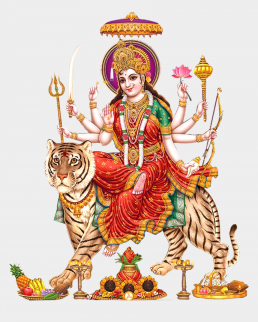
Shri Durga Chalisa: A Divine Invocation and Its Meaning
The Durga Chalisa is a popular devotional hymn of forty verses dedicated to Goddess Durga, who embodies divine energy, protection, and strength. It is written in Hindi/Awadhi. Reciting the Durga Chalisa invokes the Goddess’s blessings, granting the devotee protection, strength, and prosperity.
The Durga Chalisa is a 40-verse hymn that celebrates the might and benevolence of Goddess Durga. Each verse contains a wealth of meaning, reflecting Durga’s multifaceted nature as the universal mother, the destroyer of evil, and the protector of the righteous. Reciting this, Chalisa is believed to invoke the divine energy needed to overcome obstacles, protect oneself from negativity, and live abundantly and joyfully.
The Origins and Significance of Shri Durga Chalisa
The origins of the Durga Chalisa can be traced back to medieval devotional traditions in India. Written in the vernacular, it evolved into a potent instrument that followers might use to establish a connection with the divine feminine spirit. Devidas praised many aspects of Durga in the Chalisa, which include her beauty, fury, nurturing, and protective functions.
Who is Goddess Durga?
Goddess Durga, frequently seen astride a lion, represents the ultimate manifestation of Shakti (divine energy). She is the formidable guardian of the universe and the benevolent mother who nurtures and bestows blessings on her believers. Durga is revered in multiple manifestations, including Kali, Saraswati, and Lakshmi, each symbolising distinct facets of cosmic energy.
The Power of Reciting the Durga Chalisa
The effectiveness of chanting the Durga Chalisa resides in linking the devotee with the divine essence of the Goddess. Chanting the Chalisa with dedication is believed to alleviate fear, eliminate impediments, and facilitate spiritual and material achievement. The recurrence of these verses generates a vibrational energy that promotes cognitive clarity and emotional resilience.
Verse 1: Salutation to Goddess Durga
“namō namō durgē sukha karanī । namō namō ambē duḥkha haranī ॥“
“I bow to you, O Durga, who grants happiness. I bow to you, O Amba, who removes sorrow.”
This verse expresses a deep reverence for Durga, acknowledging her as the source of all joy and the remover of suffering. Devotees believe that invoking her can rid their lives of misery and bring them bliss.
Verse 2: The Eternal Light of Durga
“niraṅkāra hai jyōti tumhārī । tihū lōka phailī ujiyārī ॥“
“Your light is without form, spreading its radiance across the three worlds.”
Durga’s divine light is described as formless and omnipresent, illuminating all realms—heaven, earth, and the netherworld. Her light represents the cosmic energy that permeates the universe, guiding souls toward truth and righteousness.
Verse 3: The Radiant Face of the Goddess
“śaśi lalāṭa mukha mahāviśālā । nētra lāla bhṛkuṭi vikarālā ॥“
“Your face is as radiant as the moon, with large eyes and fearsome brows.”
This verse vividly depicts the Goddess’s awe-inspiring appearance. Her glowing face symbolises peace and serenity, while her furrowed brows and intense eyes convey her wrath toward evil forces.
Verse 4: The Bliss of Witnessing Durga’s Beauty
“rūpa mātu kō adhika suhāvē । daraśa karata jana ati sukha pāvē ॥“
“Your form, O Mother, is exceedingly beautiful, and those who behold you are filled with joy.”
Goddess Durga’s beauty is beyond comparison, and seeing her brings immense joy and peace to devotees. Her divine presence soothes the soul and offers spiritual contentment.
Verse 5: Durga as the Protector of the World
“tuma saṃsāra śakti laya kīnā । pālana hētu anna dhana dīnā ॥“
“You create and dissolve the world’s energy, providing food and wealth for sustenance.”
Durga is seen as the cosmic force that creates and sustains life. She is not only the mother who nourishes but also the one who controls the universe’s balance through the cycles of creation and destruction.
Verse 6: Durga as Annapurna – The Nourisher
“annapūrṇā huyi jaga pālā । tuma hī ādi sundarī bālā ॥“
“As Annapurna, you nourish the world. You are the primal, beautiful maiden.”
In her form as Annapurna, Durga provides sustenance to all living beings. This verse honours her role as the giver of food, essential for life and the eternal, youthful embodiment of beauty.
Verse 7: Durga and Her Role in Destruction
“pralayakāla saba nāśana hārī । tuma gaurī śiva śaṅkara pyārī ॥“
“During the time of destruction, you destroy everything. You are Gauri, beloved of Shiva.”
Durga is both the nurturer and the destroyer. This duality reflects her role in the cosmic cycle, where she ends the old to make way for a new creation.
Verse 8: Praises by Deities
“śiva yōgī tumharē guṇa gāvēm । brahmā viṣṇu tumhēṃ nita dhyāvēm ॥“
“Shiva, the yogi, sings your praises. Brahma and Vishnu always meditate on you.”
Even the supreme gods, Brahma (the creator), Vishnu (the preserver), and Shiva (the destroyer), recognise Durga’s power and meditate upon her, highlighting her supremacy in the divine hierarchy.
Verse 9: Goddess Durga as Saraswati
“rūpa sarasvatī kā tuma dhārā । dē subuddhi ṛṣi munina ubārā ॥“
“You assume the form of Saraswati and bestow wisdom upon the sages.”
Durga grants knowledge and wisdom in her Saraswati form, especially to sages and saints. This form of the goddess encourages intellectual growth and spiritual enlightenment.
Verse 10: Durga’s Narsimha Avatar
“dharā rūpa narasiṃha kō ambā । paragaṭa bhayi phāḍa kē khambā ॥“
“O Mother, you took the form of Narasimha and emerged from the pillar, tearing it apart.”
This verse refers to Goddess Durga’s incarnation as Narasimha, the half-lion, half-human avatar of Lord Vishnu. In the story of Prahlad, Lord Narasimha emerged from a pillar to protect the young devotee and destroy the demon king Hiranyakashipu. This symbolises Durga’s protective aspect, which manifests in different forms to uphold righteousness and protect her devotees.
Verse 11: Protecting Prahlad and Defeating Hiranyakashipu
“rakṣā kara prahlāda bachāyō । hiraṇyākṣa kō svarga paṭhāyō ॥“
“You saved Prahlad and sent Hiranyaksha to the heavens.”
This verse continues the narrative of the Prahlad story. Prahlad, a devout follower of Vishnu, was saved by Narasimha (Durga’s manifestation) from his father’s evil plans, Hiranyakashipu. The demon king Hiranyaksha, brother of Hiranyakashipu, was also slain and sent to the heavens. This verse reflects Durga’s role as a divine protector, always standing by those who are righteous.
Verse 12: The Lakshmi Form of Durga
“lakṣmī rūpa dharō jaga māhīm । śrī nārāyaṇa aṅga samāhīm ॥“
“You assumed the form of Lakshmi in the world, dwelling at the side of Lord Narayana.”
Here, the verse praises Goddess Durga for taking the form of Lakshmi, the consort of Lord Vishnu (Narayana). Lakshmi represents wealth, prosperity, and sustenance, vital for the world’s well-being. This line emphasises Durga’s versatile nature as the divine feminine who embodies different forms to fulfil cosmic responsibilities.
Verse 13: Dwelling in the Ocean of Milk
“kṣīrasindhu mēṃ karata vilāsā । dayāsindhu dījai mana āsā ॥“
“You playfully dwell in the ocean of milk and are the ocean of mercy, fulfilling our hopes.”
The “ocean of milk” refers to the celestial Kshira Sagara, where Vishnu and Lakshmi are believed to reside. Durga, in her form as Lakshmi, is portrayed here as benevolent and compassionate, always ready to fulfil the desires of her devotees. Her mercy and kindness provide solace and hope to the human heart.
Verse 14: Durga as Bhavani in Hinglaj
“hiṅgalāja mēṃ tumhīṃ bhavānī । mahimā amita na jāta bakhānī॥“
“You are Bhavani in Hinglaj, and your greatness cannot be fully expressed.”
This verse refers to the sacred temple of Hinglaj Mata, located in present-day Pakistan. The temple is one of the Shakti Peethas, where parts of Sati (Durga’s earlier incarnation) are said to have fallen. Bhavani (another form of Durga) is worshipped here, and her glory is considered beyond words. This line underlines the boundless nature of Durga’s greatness and the sacred geography associated with her worship.
Verse 15: Durga in Her Other Forms
“mātaṅgī dhūmāvati mātā । bhuvanēśvarī bagalā sukhadātā ॥“
“You are Matangi, Dhumavati, Bhuvaneshwari, and Bagala, all bestowing happiness.”
This verse lists several forms of the Goddess, representing different aspects of Shakti:
- Matangi: The goddess of wisdom and inner transformation.
- Dhumavati: The smoky manifestation, symbolising the ominous and destructive aspect of the Goddess.
- Bhuvaneshwari: The Queen of the Universe, symbolising the Mother of all creation.
- Bagalamukhi: The goddess who paralyses enemies and bestows victory.
Each form signifies different powers and abilities of Goddess Durga, demonstrating her multifaceted nature.
Verses 16-23: Durga’s Battle with Demons
“śrī bhairava tārā jaga tāriṇī ।Chinna bhāla bhava duḥkha nivāriṇī॥“
“You are Bhairavi, Tara, and Chhinnamasta, the world’s saviour, removing the sorrows of existence.”
- Bhairavi: The fierce form of Durga, connected with Bhairava (a manifestation of Shiva).
- Tara: One of the ten Mahavidyas, Tara is the goddess of compassion and protection.
- Chhinnamasta: The self-decapitating goddess, symbolising the cycle of creation and destruction.
These forms represent the Goddess’s more fearsome and protective aspects, who can alleviate the sorrows of human life.
“kēhari vāhana sōha bhavānī । lāṅgura vīra chalata agavānī॥“
“You, Bhavani, are glorious on a lion, with the valiant Langur leading the way.”
Goddess Durga is often depicted riding a lion, symbolising power, fearlessness, and control over the wild forces of nature. The lion represents her ability to conquer evil and protect her devotees. The “Langur” refers to Hanuman, who is often depicted leading the way, symbolising devotion, strength, and the unwavering support of the Goddess’s followers.
“kara mēṃ khappara khaḍaga virājē । jākō dēkha kāla ḍara bhājē ॥“
“You hold a skull and a sword in your hand, at the sight of which even Time (Death) flees in fear.”
The skull and sword in Durga’s hands symbolise her role as both the creator and destroyer. The sword represents knowledge and the power to cut through ignorance, while the skull signifies her control over life and death. Even Time (Kala) fears her, indicating her dominance over mortality.
“tōhē kara mēṃ astra triśūlā । jātē uṭhata śatru hiya śūlā ॥“
“In your hand, you hold weapons like the trident, which pierce the hearts of your enemies.”
Durga is often depicted holding a trident (Trishul), symbolising the power to destroy evil. This weapon represents the three gunas (Sattva, Rajas, and Tamas), and Durga uses it to restore balance by defeating the hostile forces. It pierces her enemies’ hearts, symbolising the defeat of internal and external evils.
“nagarakōṭi mēṃ tumhīṃ virājata । tihun lōka mēṃ ḍaṅkā bājata ॥“
“You reign supreme in every city and fortress, and your trumpet resounds through the three worlds.”
This verse highlights Goddess Durga’s omnipresence and supreme power. Her influence is felt everywhere, whether in cities or strongholds, and her victory is proclaimed across the three worlds (heaven, earth, and the underworld). This represents her ultimate authority and the universal recognition of her divine power.
“śumbha niśumbha dānava tuma mārē । raktabīja śaṅkhana saṃhārē ॥“
“You killed the demons Shumbha and Nishumbha, and annihilated the evil Raktabija.”
This verse refers to the story of the demons Shumbha and Nishumbha, who were arrogant and terrorised the three worlds. Goddess Durga fought them fiercely and conquered them, restoring peace. Raktabija, another demon, had a unique ability: every drop of his blood that fell to the ground would spawn a new demon. In her fierce form as Kali, Durga caught his blood before it hit the ground, preventing new demons from emerging and eventually destroying him. This episode highlights Durga’s supreme power to overcome even the most seemingly invincible evils.
“mahiṣāsura nṛpa ati abhimānī । jēhi agha bhāra mahī akulānī ॥“
“The proud king Mahishasura burdened the earth with his sins and arrogance.”
Mahishasura, the buffalo demon, was extremely powerful and arrogant, creating chaos and distress. His tyranny became unbearable, and the gods prayed for divine intervention. Overburdened by his misdeeds, the Earth represents the suffering caused by unchecked power and arrogance.
“rūpa karāla kālikā dhārā । sēna sahita tuma tihi saṃhārā ॥“
In the fierce form of Kali, you destroyed Mahishasura and his army.
Durga assumed Kali’s terrible and fierce form to defeat Mahishasura. The image of Kali represents Durga’s transformative energy, which can take on terrifying forms to destroy evil. She killed Mahishasura and annihilated his vast army, symbolising the complete eradication of the forces of darkness.
In these verses of the Durga Chalisa, the poet praises Durga’s various manifestations and powers. She is not only a protector but also the one who nurtures, destroys, and transforms the universe. Her form is compassionate and fierce, guiding her devotees toward righteousness while removing obstacles and evil forces.
Verse 24: Durga comes to the rescue
“paḍī bhīḍha santana para jaba jaba । bhayi sahāya mātu tuma taba taba ॥“
“When the saints and sages were attacked, O Mother, you always came to their aid.”
Whenever the righteous (saints and sages) were oppressed or faced adversity, Goddess Durga came to their rescue. This verse acknowledges Durga’s unwavering support for the virtuous, underscoring her role as a divine protector of dharma (righteousness).
Verse 25: Durga salvaged from despair
“amarapurī aru bāsava lōkā । taba mahimā saba kahēṃ aśōkā ॥“
“In Amaravati’s heavenly realms and Indra’s abode, all praise your glory without sorrow.”
Even in the celestial realms, including Amaravati (the capital of the heavens) and Baasava Loka (Indra’s abode), the glory and power of Goddess Durga are revered. The reference to “without sorrow” (aśōkā) highlights that there is no suffering or sadness where Durga’s presence is acknowledged.
Verse 26: Durga stays within the eternal flames
“jvālā mēṃ hai jyōti tumhārī । tumhēṃ sadā pūjēṃ nara nārī ॥“
“Your radiance shines in the flames, and men and women always worship you.”
The divine energy of Goddess Durga is present in the eternal flames, symbolising her omnipresence and power. Both men and women honour and worship her constantly, recognising her as the source of spiritual light and inspiration. Fire is often associated with purity and transformation, emphasising Durga’s purifying nature.
Verse 27: The Goddess’s ability to bring prosperity
“prēma bhakti sē jō yaśa gāvēm । duḥkha dāridra nikaṭa nahiṃ āvēm ॥“
“Those who sing your glories with love and devotion are never troubled by sorrow or poverty.”
This verse emphasises the blessings received by devotees who worship Goddess Durga with pure love and devotion. Singing her praises protects one from the pains of sorrow and the hardships of poverty, symbolising the Goddess’s ability to bring prosperity and inner peace to her followers.
Verse 28: Goddess bestows moksha,
“dhyāvē tumhēṃ jō nara mana lāyi । janma maraṇa tē sauṃ Chuṭa jāyi ॥“
“Whoever meditates on you with total concentration is freed from the cycle of birth and death.
The practice of focused meditation on Goddess Durga is said to liberate the soul from the endless cycle of Samsara (birth and death). Durga represents the ultimate spiritual power that grants moksha (liberation) to her devotees, helping them transcend the limitations of human existence.
Verse 29: Durga represents Energy
“jōgī sura muni kahata pukārī । yōga na hōyi bina śakti tumhārī ॥“
“Yogis, gods, and sages proclaim that no yoga is possible without your power.”
This verse highlights the belief that Shakti (the divine feminine energy embodied by Durga) is essential for yoga practice. Even gods, yogis, and sages acknowledge that spiritual practices cannot bear fruit without Shakti’s energy. As the source of Shakti, Durga is crucial for both spiritual and worldly accomplishments.
Verse 30: Durga empowering nature
“śaṅkara āchāraja tapa kīnō । kāma aru krōdha jīta saba līnō ॥“
“Even Lord Shiva performed great penance and conquered lust and anger with your blessings.”
Even Shiva, the great ascetic, is depicted here as benefiting from Goddess Durga’s grace in overcoming base emotions like kama (lust) and krodha (anger). This verse reflects Durga’s empowering nature, which aids in transcending the most difficult challenges of the human condition, even for the gods.
These verses of the Durga Chalisa celebrate the Goddess’s many victories over evil, her role as a protector of the righteous, and her importance in spiritual practices. Durga is depicted as both compassionate and fierce, capable of bestowing blessings on her devotees while eradicating the forces of ignorance and darkness. Her presence in both the material and spiritual realms makes her an integral figure in the cosmic order, revered by g
Gods, yogis, and human beings alike.
Verse 31: Shiva meditates on Durga
“niśidina dhyāna dharō śaṅkara kō । kāhu kāla nahiṃ sumirō tumakō ॥“
“Lord Shiva constantly meditates on you, but there are times when others forget to remember you.”
This verse points out that while Shiva—the greatest yogi—constantly contemplates Durga, ordinary beings often forget to remember her daily. It implies that one can maintain a strong connection with the divine through regular meditation and devotion. Forgetting Durga in times of ease may lead to suffering when challenges arise.
Verse 32: Essence of Durga
śakti rūpa kō marama na pāyō ।śakti gayī taba mana paChatāyō ॥
“One who fails to understand the true nature of Shakti loses her power and then repents.”
This verse conveys that the true essence of Shakti (the divine feminine energy embodied by Durga) must be understood and respected. When people fail to recognise her power and misuse or disregard it, they eventually lose her blessings and regret it. This highlights the importance of reverence and wisdom in maintaining spiritual strength.
Verses 33-34: Durga granted strength
“śaraṇāgata huyi kīrti bakhānī । jaya jaya jaya jagadamba bhavānī ॥“
“Those who seek refuge in you sing your glories, chanting victory to you, O Jagadamba Bhavani.”
This verse expresses the joy and gratitude of devotees who, having taken refuge in Durga, experience her protection and grace. In response, they sing her praises and chant “Victory to Jagadamba Bhavani,” recognising her as the universal mother who watches over them. Devotion and surrender to Durga bring about positive transformation in one’s life.
“bhayi prasanna ādi jagadambā ।dayi śakti nahiṃ kīna vilambā ॥“
“When the primal Goddess, Jagadamba, became pleased, she granted her strength without delay.”
This verse speaks to Durga’s immediate response when she is pleased with her devotee’s sincere prayers and devotion. As Adi Jagadamba, the primal mother of the universe, she quickly bestows her divine energy, Shakti, to those who earnestly seek her blessings, aiding them in overcoming their obstacles.
Verses 35-37: Durga destroys enemies
“mōkō mātu kaṣṭa ati ghērō । tuma bina kauna harai duḥkha mērō ॥“
“O Mother, I am surrounded by immense suffering; who else but you can remove my sorrow?”
In this verse, the devotee expresses deep distress and turns to Durga as the only one capable of relieving their suffering. It reflects a plea for divine intervention in extreme hardship and an acknowledgment of the mother’s unique power to bring comfort and alleviate pain.
“āśā tṛṣṇā nipaṭa satāvēm । ripu mūrakha mohi ati dara pāvaim ॥“
“Hope and desire torment me greatly, and I am fearful of enemies and the foolish.”
The devotee laments the turmoil caused by unfulfilled desires and aspirations, which lead to suffering. They also express fear of enemies and foolish people who bring more challenges. This verse reflects the human condition of being entangled in worldly desires and anxieties, for which the devotee seeks Durga’s protection and guidance.
“śatru nāśa kījai mahārānī । sumirauṃ ikachita tumhēṃ bhavānī ॥“
“O Great Queen, destroy my enemies as I meditate on you with single-minded devotion.”
The devotee prays to Durga, Mahārānī (Great Queen), to eliminate their enemies—external foes or internal weaknesses—while they meditate on her with complete focus. This verse underscores the idea that sincere devotion to Durga leads to the destruction of physical, emotional, or spiritual obstacles.
Verse 38: Durga grants spiritual and material success.
“karō kṛpā hē mātu dayālā । ṛddhi-siddhi dē karahu nihālā ॥“
“O Compassionate Mother, bestow your grace and grant me spiritual and material success.”
Here, the devotee appeals to Durga’s compassion, asking her to bless them with ṛddhi (prosperity) and siddhi (spiritual success or perfection). This reflects a desire for worldly and spiritual well-being, recognising that both come from the divine grace of the compassionate mother.
Verses 39-40: Devotee sings the praises of Durga
“jaba lagi jiyū dayā phala pāvū । tumharō yaśa maiṃ sadā sunāvū ॥“
“May I receive the fruits of your compassion as long as I live, and I will always sing your praises.”
The devotee vows to continually sing Durga’s praises throughout life, acknowledging that all their blessings and successes result from her divine compassion. This reflects the devotee’s gratitude and commitment to spreading the glory of the Goddess.
“durgā chālīsā jō gāvai । saba sukha bhōga paramapada pāvai ॥“
“Whoever recites this Durga Chalisa will enjoy all pleasures and ultimately attain the supreme state.”
This verse promises that those who faithfully recite the Durga Chalisa will be blessed with happiness and material success, but more importantly, they will attain Paramapada (the highest spiritual state). It suggests that devotion to Durga brings both worldly fulfilment and spiritual liberation.
“dēvīdāsa śaraṇa nija jānī । karahu kṛpā jagadamba bhavānī ॥“
“O Devi Das, knowing me to be your servant, bestow your grace, O Jagadamba Bhavani.”
In this final verse, the devotee humbly refers to themselves as Devī Dāsa (servant of the Goddess) and seeks Durga’s grace, recognising her as Jagadamba Bhavani (Mother of the Universe). This concluding plea for divine mercy encapsulates the devotee’s submission and trust in Durga’s protective and nurturing nature.
The Durga Chalisa presents a powerful narrative of the Goddess Durga’s role as both protector and destroyer. Through these verses, the devotee expresses their faith in Durga’s ability to overcome challenges, defeat evil forces, and provide spiritual enlightenment. The Chalisa is a holy hymn, reinforcing that sincere worship and unwavering devotion to Durga can lead to material prosperity and ultimate liberation.
Other Durga Shlokams
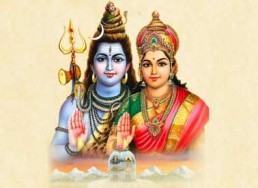
Ahalya Draupadi Sita Tara
Meditate upon the five virtuous devis eternally - Ahalya, Draupadi, Sita, Tara and Mandodari - and all atrocities and sins will be destroyed
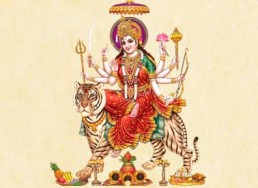
Argala Stotram
The Argala Stotram is a powerful hymn dedicated to Goddess Durga, often recited during the Chandi Path or Durga Saptashati.
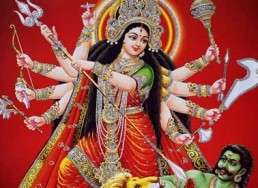
Ayigiri Nandini
The Mahishasura Mardini Stotram also known popularly as Aigiri Nandini, holds immense significance during Navratri. The word Mahisha means buffalo and Asura means Rakshasa or Demon. Composed by the great sage Adi Shankaracharya around 810 AD, this…
Ayigiri Nandini – Chanting – English
The Mahishasura Mardini Stotram also known popularly as Aigiri Nandini, holds immense significance during Navratri. The word Mahisha means buffalo and Asura means Rakshasa or Demon. Composed by the great sage Adi Shankaracharya around 810 AD, this…
Ayigiri Nandini – Chanting – Sanskrit
The Mahishasura Mardini Stotram also known popularly as Aigiri Nandini, holds immense significance during Navratri. The word Mahisha means buffalo and Asura means Rakshasa or Demon. Composed by the great sage Adi Shankaracharya around 810 AD, this…
Bhavani Ashtakam
Composed by Sri Adi Shankaracharya. Bhavani Ashtakam is a popular hymn on Goddess Bhavani, who is known for her protection and merciful nature. The Lyrics of this hymn have an in-depth meaning that wh
Bhavani Bhujangam
Bhavani Bhujanga Stotra is composed by Shri Adi Shankaracharya. He praises the glorious beauty of Bhavani (Goddess Parvati) from head to toe. Bhavānī means the deity who always
Devi Aparadha Kshamapana Stotram
Composed by Sri Adi Shankaracharya. Aparadha Kshamapana stotram is usually recited after a recital or after the completion of Puja. Its like asking for forgiveness from Goddess for various mistakes th
Devi Kavacham
The Devi Kavacham is an integral part of the Devi Mahatmyam , one of the most revered text
Devi Suktam
Devi Suktam or the Vaak Sutam (Vak suktam) occurs in the 10th mandala of Rig Veda Samhita as suktam number 125. The seer of the mantra is vak, the daughter of rishi ambharnaa,
Durga Devi Kavacham
The Durga Devi Kavacham is a sacred protective hymn dedicated to Goddess Durga, where "kavacham" literally means "armour." This powerful prayer serves as spiritual prote
Durga Suktam
The Durga Suktam is a Vedic hymn found in the Maha Narayana Upanishad, primarily addressed to Agni (the god of fire) as a representation of the Divine Mother Durga's fie
Kalika Ashtakam
The Kalika Ashtakam is a Sanskrit hymn of eight verses dedicated to Goddess Kali, the fierce and protective form of the Divine Mother. This devotional text focuses on Ka
Kamakshi Stotram
Composed by Sri Adi Shankaracharya. Goddess Kamakshi is a form of Tripura Sundari or Parvati or the universal mother goddess. The word is derived from the heritage “Ka” meaning Goddess Saraswati (Godd
Keelaka Stotram
Rishi Markandeya tells his disciples in sixteen shlokas the ways and means of removing obstacles faced by devotees while reading Devi Mahatmya. Keelaka here refers to a "pin" o
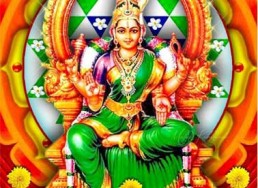
Lalitha Panchakam
Composed by Sri Adi Shankaracharya in praise of mother Lalitha. The phalastuti of the stotram says the divine mother will give good knowledge, wealth, fame, happiness, fortune, and prosperity.
Lalitha Sahasranamam
Lalitha Sahasranamam is a sacred Hindu text from the Brahmanda Purana which lists the thousand names of the Hindu mother goddess Lalita Devi, a manifestation of the Divine Mother (Shakti), and is therefore used in the worship of Durga, Parvati,…
Mahishasura Mardini Storam
Mahishasura Mardini Stotram - This is a prayer to the Goddess who killed Mahishasura. “The place where Sri Mahishasura Mardini Stotram is sung every day, I will always be present and never leave.” - The Devi’s proclamation in the 12th chapter of the…
Navadurga Stotram
The Navadurga Stotram is a sacred hymn dedicated to the nine forms of Goddess Durga, collectively known as the Navadurga (nava means nine). This devotional text holds sp
Navratri
Significance of Navaratri. Shlokas and Stotrams and Songs to be chanted during Navratri. All in one page without ads.
Sarva Mangala Mangalye
Sarva Mangala Mangalye - Salutations to you O Narayani, who is the auspiciousness of all that is auspicious, the consort of Lord Shiva, who is the means of accomplishing all desires, and who is the refuge of all, the consort of the three eyed Shiva,…
Shakradaya Stuti
This famous stuti is sung by Shakra (Indra) and the other devas in praise of Durga. This is part of Chandi path which is a text about Goddess Chandi. It is also called Durga Saptashati or 700 verses r
Sri Durga Saptashloki
The Sri Durga Saptashloki is a powerful hymn composed of seven sacred verses in praise of Goddess Durga, extracted from the revered Devi Mahatmyam (also known as Chandi
Tantrokta Ratri Suktam
Ratri Sukta is one of the famous hymn to Goddess Durga. This in true essence praises the latent energy in Narayana and in every sadhak. Ratri Suktam is used to invoke that energy and to enhance the mi
Uma Usha Ca Vaidehi
Meditate upon the five devis- Uma, Usha, Vaidehi, Ramaa, Ganga at dawn and prosperity will grow for ever.
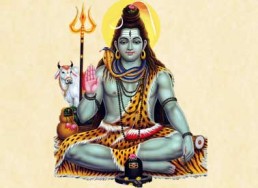
Vagarthaviva Sampruktau
Kalidasa prays to the divine parents Paarvathi & Parameshwara who are inseparable like the word and its meaning, in order to guide him in acquiring the power of words and their meanings (literature) as he embarks on the Mahakavya, Raghuvamsa.
Durga Chalisa – Durga – In Sanskrit, English Translation, Meaning, Significance and Audio.