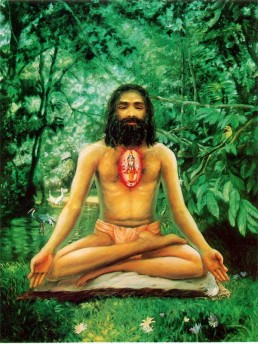
In the previous verses Arjuna wanted to know the ways and means of achieving the constant experience of inward equilibrium. Sri Krishna explains the methods of self- development and the technique of self-perfection which can be attained by all. The method taught by The Lord requires the seekers to exert themselves by constantly practicing concentration which is called meditation.
The pre-requisites for practicing meditation are:
Rahasi Sthitah – Remaining in solitude: Sitting in solitude one should practice meditation. This does not mean that meditation can be practiced only in jungles or in lonely caves. It means that even in one’s own home one should try to withdraw himself mentally and physically from the normal preoccupations and retire to a secluded spot for practicing meditation. Solitude can be gained only when there is mental withdrawal from the world outside. One who is full of desires and constantly thinking about sense-objects cannot gain solitude even in a remote forest. Solitude lifts our hearts and exalts our minds. In a world which is daily growing noisier, the duty of the civilized man is to have moments of thoughtful stillness. Retiring to a quiet place, we should keep off all external distractions.
Ekaki ‘ Alone: For the purposes of meditation one has to be physically alone. His success depends upon the amount of self-control he is adopting in his daily life.
Yatachittatmana – Self-controlled. He must not be excited, strained or anxious. There should be no restlessness or turbulence. The heart must become clean if it is to reflect God who is to be seen and known only by the pure in heart.
Niraasheer – Free from desires: Worry about daily needs, about earning and spending, disturbs meditation and takes us away from the life of the spirit. So we must be free from desire and anxiety born of it, from greed and fear. We should expect nothing, insist on nothing.
Aparigrahah – Free from longing for possessions: This is a spiritual state and not a material condition. We must control the appetite for possessions; free ourselves from the tyranny of belongings. One cannot hear God’s voice, if one is restless and self-centered, if one is dominated by feelings of pride, jealousy or possessiveness.
‘The Gita points out our happiness is inward. It invites our attention to the manner of our life, the state of human consciousness, which does not depend upon the outward machinery of life. The body may die and the world pass away but the life in spirit endures. Our treasures are not the things of the world that perish but the knowledge and love of God that endure. We must get out of the slavery to things to gain the glad freedom of spirit.
Here the Lord develops the technique of mental discipline on the lines of Patanjali’s Yoga Sutras. When one starts meditating upon the Truth within these parameters, he is considered to be the true seeker trying to achieve the highest in life. The main purpose of this exercise is to raise our consciousness from its ordinary waking condition to higher levels until it attains Union with the Supreme. The human mind is ordinarily turned outwards. Absorption in the mechanical and material sides of life leads to misbalanced condition of consciousness.
Yoga attempts to explore the inner world of consciousness and helps to integrate the conscious and the sub-conscious. We must divest our minds of all sensual desires, abstract our attention from all external objects and absorb it in the object of meditation. By summoning all the energies of the mind and fixing them on one point, we raise the level of reference from the empirical to the real, from observation to vision and let the spirit take possession of our whole being. The practice must be constant. It is no use to taking to meditation by fits and starts. A continuous creative effort is necessary for developing the higher, the intenser form of consciousness’. – Dr. S. Radhakrishnan.
OTHER AIDS TO MEDITATION
The Lord now explains the other aids to meditation like modes of sitting, eating, recreation etc. in the following verses.