Commentary
The Self is incomprehensible because it is not known by the ordinary means of knowledge. Though the knowledge of the Self is freely accessible to all mankind, it is attained only by a very few who are willing to pay the price in the form of self-discipline, steadfastness and non-attachment. Though the truth is open to all, many do not feel any urge to seek. Of those who have the urge, many suffer from doubt and vacillation. Even if they do not have doubts, many are scared away by difficulties. Only a few rare souls succeed in braving the perils and reaching the goal.
Although it is difficult to comprehend the idea of the Self, if one starts the practice of listening (sravanam), continuous reflection (mananam) and long contemplation (nidhidhyasan) it is possible to realize the Self in him.
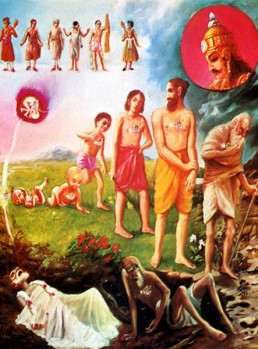
KRISHNA CONCLUDES THE DISCUSSION ABOUT THE DISCRIMINATION BETWEEN THE SOUL AND THE BODY
Swami Chinmayananda Commentary
The commentary on this verse and the rest, is avaialble for free as:
Kindle eBook
Google Play Book
Apple Books
Adi Sankara Commentary
‘This Self under discussion is inscrutable. Why should I blame you alone regarding a thing that is a source of delusion to all!’ How is this Self inscrutable? [It may be argued that the Self is the object of egoism. The answer is: Although the individualized Self is the object of egoism, the absolute Self is not.] This is being answered in, ‘Someone visualizes It as a wonder,’ etc.
Kascit, someone; pasyati, visualizes; enam, It, the Self; ascaryavat, as a wonder, as though It were a wonder-a wonder is something not seen before, something strange, something seen all on a sudden; what is comparable to that is ascarya-vat; ca, and; tatha, similarly; eva, indeed; kascit, someone; anyah, else; vadati, talks of It as a wonder. And someone else srnoti, hears of It as a wonder. And someone, indeed, na, does not; veda, realize It; api, even; srutva, after hearing, seeing and speaking about It.
Or, (the meaning is) he who sees the Self is like a wonder. He who speaks of It and the who hears of It is indeed rare among many thousands. Therefore, the idea is that the Self is difficult to understand.
Now, in the course of concluding the topic under discussion, [viz the needlessness of sorrow and delusion,from the point of view of the nature of things.] He says, ‘O descendant of Bharata, this embodied Self’, etc.
The Bhagavad Gita with the commentary of Sri Sankaracharya – Translated by Alladi Mahadeva Sastry
Holy Geeta – Commentary by Swami Chinmayananda
The Bhagavad Gita by Eknath Easwaran – Best selling translation of the Bhagavad Gita
The Bhagavad Gita – Translation and Commentary by Swami Sivananda
Bhagavad Gita – Translation and Commentary by Bhaktivedanta Swami Prabupadha
Srimad Bhagavad Gita Chapter 2 – Verse 29 – 2.29 ashcharya – All Bhagavad Gita (Geeta) Verses in Sanskrit, English, Transliteration, Word Meaning, Translation, Audio, Shankara Bhashya, Adi Sankaracharya Commentary and Links to Videos by Swami Chinmayananda and others – Feb-29